

Knowledge Products
Training & awareness materials for community engagement, capacity building, and educational purposes.
We believe knowledge should be shared to strengthen communities and institutions. This section provides ready-to-use training and awareness materials for community engagement, capacity building, and educational purposes.
Usage Note: These materials are free for non-commercial community use. They must not be sold or used for commercial purposes.
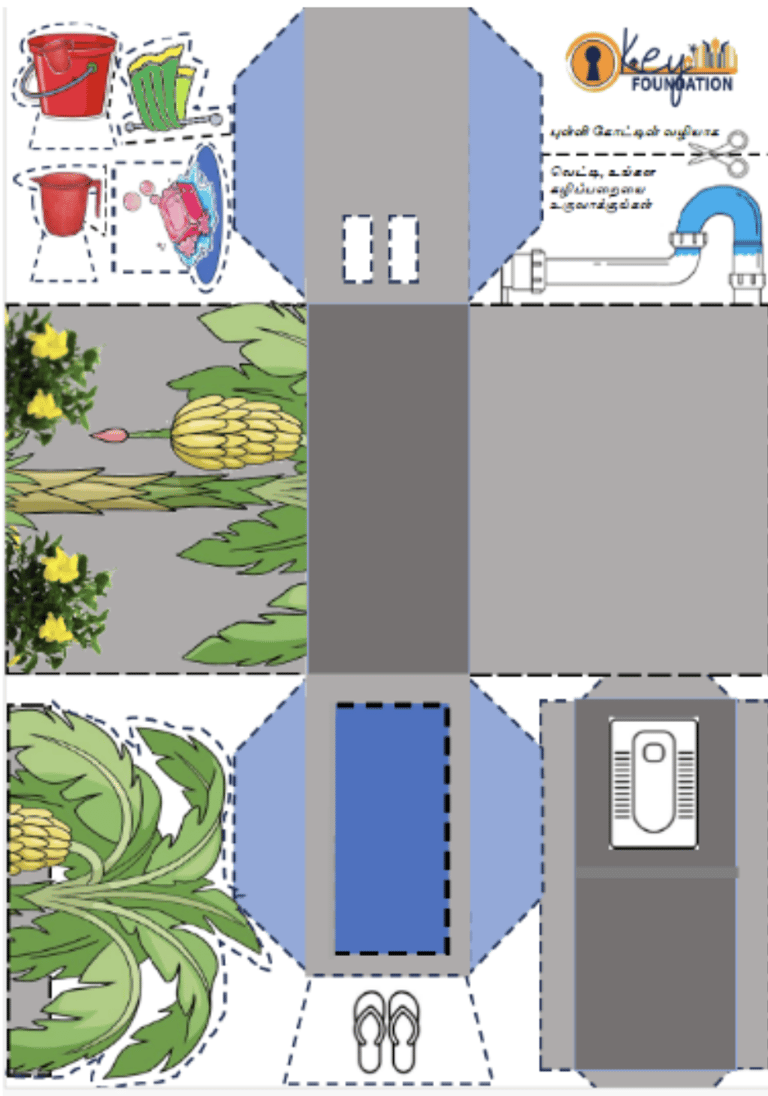
Make Your Own Toilet (Activity-Based Learning Tool)
Engages children through hands-on learning and encourages them to become change agents in promoting safe sanitation practices.
Material
Use
To be printed on A3 size board
Engages children through hands-on learning and encourages them to become change agents in promoting safe sanitation practices.
How It Works
Impact
Children tend to retain and share knowledge better through interactive activities. The models they create are often taken home, reinforcing learning and spreading awareness within households.
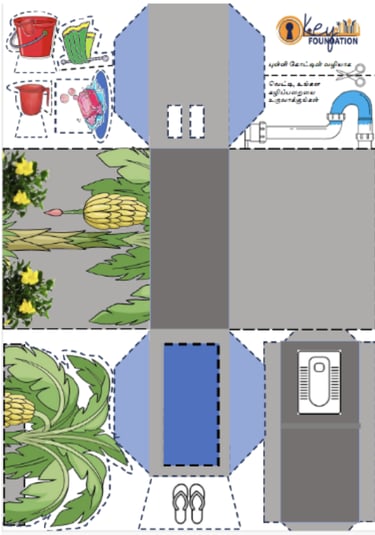
Children are provided with a printed sheet of the model. Using scissors and adhesive, they cut along the dotted lines and assemble their own toilet model. This interactive activity helps them understand sanitation concepts in a practical way and encourages them to share their learning with their families.
Request this material
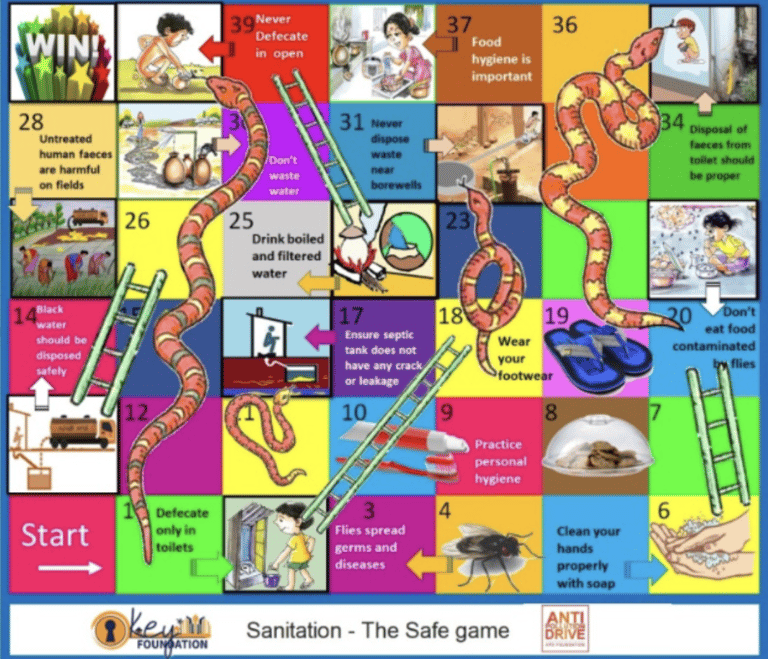
Sanitation – The Safe Game (Interactive Learning Tool)
Promotes playful learning of hygiene and sanitation practices through an interactive group activity.
Material
Use
To be printed as a large floor banner suitable for children to walk and play on.
Promotes playful learning of hygiene and sanitation practices through an interactive group activity.
How It Works
Impact
Children enjoy the activity as it differs from a typical classroom session. The interactive nature increases participation, attention, and retention of hygiene practices.
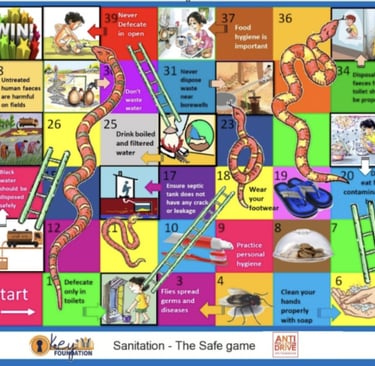
The banner is spread on the ground and children participate as players. Using a dice, they move across the board themselves instead of using tokens. Each time they land on a square, they read the message aloud, allowing others to listen and engage. This interactive format helps reinforce key messages on hygiene and sanitation in a fun and memorable way.
Request this material
Entrepreneurship Toolkit – Understanding Customer Behaviour
Promotes playful learning of hygiene and sanitation practices through an interactive group activity.
Material
Use
To be printed as flash cards
Helps entrepreneurs understand key factors that influence customer decision-making in a simple and relatable way.
How It Works
Impact
Entrepreneurs are able to easily relate these concepts to real-life situations, making learning practical and applicable. This strengthens their understanding of customer needs and supports better business decision-making.
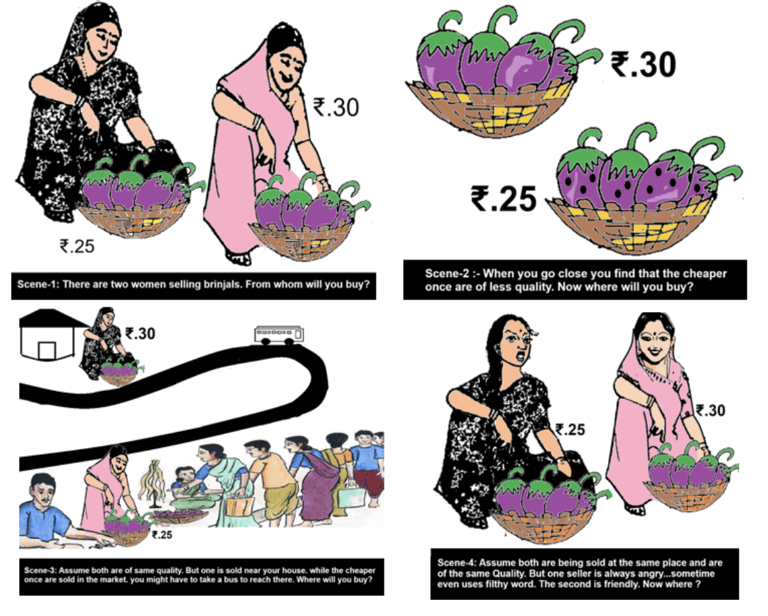
The flash cards use a familiar example (buying vegetables) to explain customer behaviour. Each card highlights a key factor that influences buying decisions: Price – Customers compare costs; Quality – Better quality influences choice; Accessibility / Availability – Convenience matters; Customer Relationship – Friendly interaction builds trust. Facilitators use these cards in group discussions, encouraging participants to reflect on their own experiences and connect these concepts to their businesses.
Request this material
Entrepreneurship Toolkit: Six Golden Rules for Running an Enterprise
Helps entrepreneurs understand the key principles required to run and sustain a successful enterprise.
Material
Use
To be printed as a poster / handout for training sessions
Helps entrepreneurs understand the key principles required to run and sustain a successful enterprise.
How It Works
Impact
Entrepreneurs gain a structured understanding of business fundamentals, enabling them to identify gaps, improve practices, and strengthen the sustainability of their enterprises.
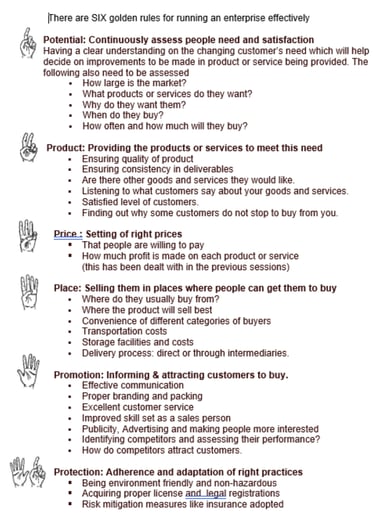
This tool introduces six essential aspects of running a business effectively. Each section can be discussed interactively with participants, encouraging them to reflect on their own enterprise practices: Potential (Understanding Customer Needs) – Identifying what customers want, why they want it, when they buy, and how often; Product (Meeting the Need) – Ensuring quality, consistency, and alignment with customer expectations; Price (Setting the Right Price) – Understanding what customers are willing to pay and ensuring profitability; Place (Where to Sell) – Choosing the right location, accessibility, and distribution methods; Promotion (Attracting Customers) – Communication, branding, customer service, and understanding competition; Protection (Sustaining the Enterprise) – Legal compliance, risk management, and environmentally responsible practices.
Request this material
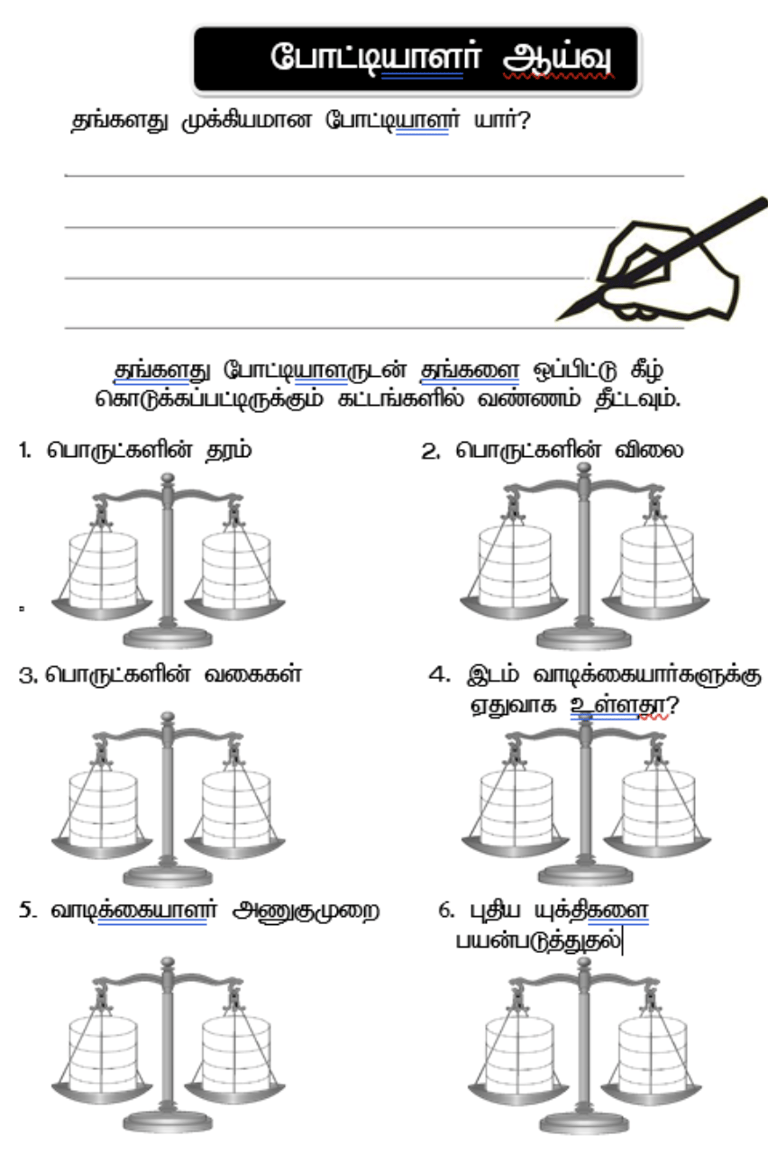
Entrepreneurship Toolkit: Competitor Analysis (Worksheet)
Helps entrepreneurs understand how to compare their products/services with competitors and make informed decisions on pricing, quality, and value.
Material
Use
To be printed as a worksheet / training handout
Helps entrepreneurs understand how to compare their products/services with competitors and make informed decisions on pricing, quality, and value.
How It Works
Impact
Entrepreneurs develop a better understanding of market competition and customer expectations. This helps them make informed decisions on pricing, quality improvement, and positioning their products/services more effectively.
This tool uses a simple comparison format to help participants analyse differences between their offering and others in the market. Facilitators guide participants to reflect on: Price – How does your pricing compare with others? Quality – Are your products/services better, similar, or lower? Value for money – What do customers perceive? Customer preference – Why do customers choose one over another? Scope for improvement – What can be improved to stay competitive?
Request this material
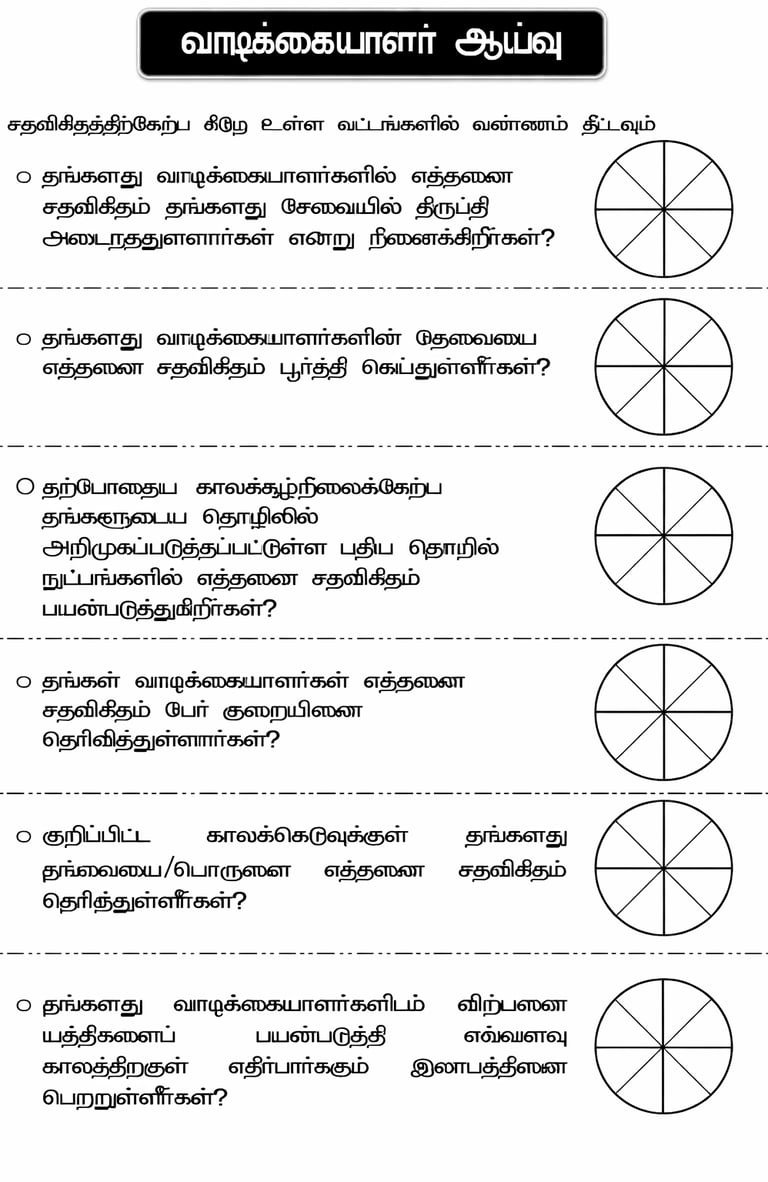
Entrepreneurship Toolkit: Customer Analysis (Worksheet)
Helps entrepreneurs understand their customers' needs, preferences, and spending patterns to improve business decisions.
Material
Use
To be printed as a worksheet / training handout
Helps entrepreneurs understand their customers' needs, preferences, and spending patterns to improve business decisions.
How It Works
Impact
Entrepreneurs gain a deeper understanding of their target customers, enabling them to better align their products, pricing, and services. This leads to improved customer satisfaction and stronger business performance.
This tool guides participants through a structured reflection on their customers using simple questions and visual prompts. Facilitators support participants to explore: Who their customers are; What customers value most (price, quality, convenience, etc.); How customers prioritize their spending; What influences their buying decisions; Gaps between what customers need and what is currently offered.
Request this material
Financial Literacy Tool: Vision Building & Goal Setting Exercise
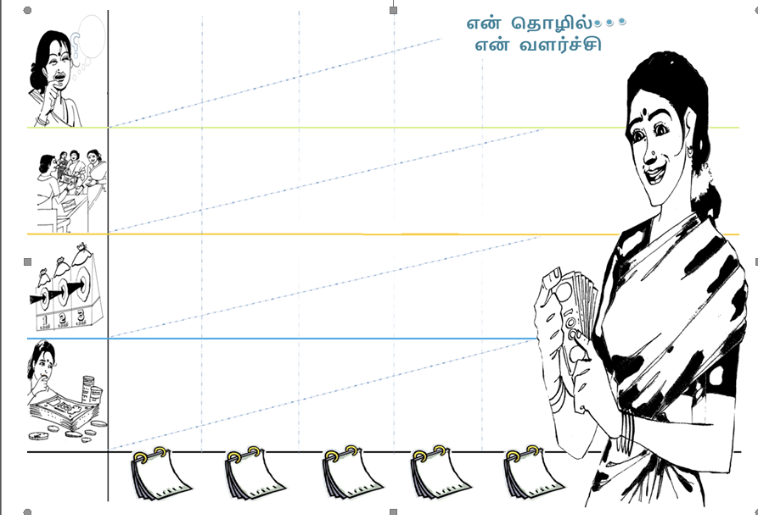
Helps individuals, especially women, reflect on their current situation and plan for their future by setting personal and financial goals.
Material
Use
To be printed as a poster / interactive worksheet
Helps individuals, especially women, reflect on their current situation and plan for their future by setting personal and financial goals.
How It Works
Impact
Participants develop clarity about their future and begin to think beyond immediate needs. The exercise builds motivation, encourages goal-oriented thinking, and supports better financial planning and decision-making.
This visual tool guides participants through a structured reflection process—from their present situation to their future aspirations. Facilitators use the tool to initiate discussion on: Current financial situation and challenges; Aspirations for self and family (education, income, assets, wellbeing); Steps required to achieve these goals; Importance of planning, saving, and consistent effort.
Request this material
Financial Literacy Tool: Understanding Financial Priorities
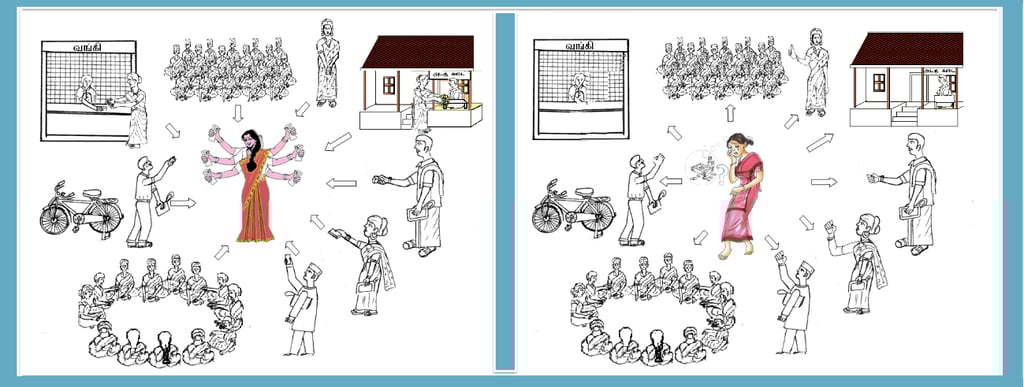
Helps individuals, especially women and community members, understand how to prioritize spending, manage limited resources, and make informed financial decisions.
Material
Use
To be printed as flash cards / visual training posters
Helps individuals, especially women and community members, understand how to prioritize spending, manage limited resources, and make informed financial decisions.
How It Works
Impact
The visual format makes it easy for participants to understand complex financial concepts. It encourages reflection, discussion, and behaviour change, helping individuals make more informed and confident financial decisions.
The visual compares two scenarios—one showing balanced and thoughtful financial decision-making, and another showing confusion or lack of prioritization. Through guided discussion, facilitators engage participants to reflect on: How money is currently being spent; What expenses are essential vs non-essential; The importance of planning and prioritizing needs; The role of savings and financial discipline.
Request this material
Creating Smiles Entrepreneurship Promotion,
Entitlement Facilitation,
Environment Protection, Equity & Inclusion
Quick links
Address
5/240, Sathi Nagar, Vinayagapuram, Adavathur (East),
Tiruchirappalli – 620102,
Tamil Nadu.
Bank Details